Zdeněk Miler heißt der Zeichner des allseits beliebten kleinen Maulwurfs (tschechisch: krtek); Radio Prag brachte einen Beitrag über ein Beispiel tschechisch-deutsche[n] Kulturtransfer[s].
Venedig, Castello 1

Nunmehr die Nummer 1 des Sestiere Castello in der Fondamenta de Quintavale.
Venedig, San Polo 1

Die Nummer 1 des Sestiere San Polo in der Ruga dei Oresi.
Meyrink zur numero conscriptionis, Prag 1913
Schon viele Jahre her ist es, dass mir Kurt Krolop den Hinweis auf ein Hausnummernzitat von Gustav Meyrink gegeben hat, über das ich nun wieder gestolpert bin; Meyrink mokiert sich damit wohl über das Weiterleben der Konskriptionsnummerierung:
Der »Verein zur Behebung des Femdenverkehrs« in der Ferdinandstraße vis-à-vis »Platteis«, schräg gegenüber dem Friseur Gürtler, das elfte Haus von Norden, numero conscriptionis 7814478189 b gibt auf alle Fragen bereitwilligst Antwort.
In böhmischer Sprache natürlich.
Meyrink, Gustav: Prag. Eine optimistisch gehaltene Städteschilderung in vier Bildern, in: Ders.: Des deutschen Spießers Wunderhorn. Wien/Köln/Graz: Böhlau, 1987, S. 283291, hier S. 284 (EA 1913; Volltext bei Gutenberg)
Der »Verein zur Behebung des Femdenverkehrs« in der Ferdinandstraße vis-à-vis »Platteis«, schräg gegenüber dem Friseur Gürtler, das elfte Haus von Norden, numero conscriptionis 7814478189 b gibt auf alle Fragen bereitwilligst Antwort.
In böhmischer Sprache natürlich.
Meyrink, Gustav: Prag. Eine optimistisch gehaltene Städteschilderung in vier Bildern, in: Ders.: Des deutschen Spießers Wunderhorn. Wien/Köln/Graz: Böhlau, 1987, S. 283291, hier S. 284 (EA 1913; Volltext bei Gutenberg)
Robertson zur Identitätsfeststellung Mitte 19.Jh
Frisch erschienen:
Robertson, Craig: Four Documents, a Non-Citizen, and a Diplomatic Controversy: The Documentation of Identity in the Mid-Nineteenth Century, in: Journal of Historical Sociology, 22.2009/4, S.476 - 496.
DOI: 10.1111/j.1467-6443.2009.01366.x
Abstract:
A forgotten diplomatic controversy centered on the claim to U.S. protection by a yet-to-be-naturalized citizen is analyzed to offer insights into the mid-nineteenth century understanding of the status and function of the documentation of individual identity. It makes clear the documentation of identity had a contested and gradual development. Documentation was contested in that people (both officials and members of the public) struggled to understand how it was that a document identified a person. This uncertainty centered not only on who had the authority to document identity, but how that authority was represented on a document. Beyond its mid-nineteenth century and U.S. focus this essay is intended to provide the context for an understanding of the administrative, bureaucratic, and social developments that had to occur before identification documents could play a pivotal role in the development of the twentieth century state. In this way it suggests that official identification is an important object of analysis for debates about the articulation of information and governing in state formation.
Robertson, Craig: Four Documents, a Non-Citizen, and a Diplomatic Controversy: The Documentation of Identity in the Mid-Nineteenth Century, in: Journal of Historical Sociology, 22.2009/4, S.476 - 496.
DOI: 10.1111/j.1467-6443.2009.01366.x
Abstract:
A forgotten diplomatic controversy centered on the claim to U.S. protection by a yet-to-be-naturalized citizen is analyzed to offer insights into the mid-nineteenth century understanding of the status and function of the documentation of individual identity. It makes clear the documentation of identity had a contested and gradual development. Documentation was contested in that people (both officials and members of the public) struggled to understand how it was that a document identified a person. This uncertainty centered not only on who had the authority to document identity, but how that authority was represented on a document. Beyond its mid-nineteenth century and U.S. focus this essay is intended to provide the context for an understanding of the administrative, bureaucratic, and social developments that had to occur before identification documents could play a pivotal role in the development of the twentieth century state. In this way it suggests that official identification is an important object of analysis for debates about the articulation of information and governing in state formation.
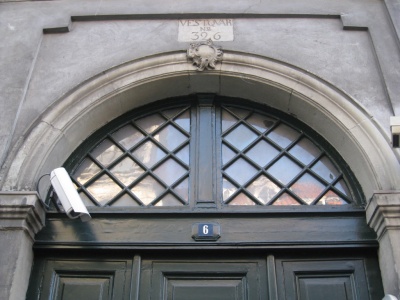
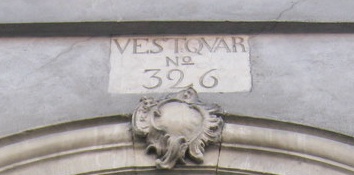
Kopenhagen 326
Kant: Fließtext der „Kritik der Urteilskraft“
Hier ist sie nun (vgl.), die Adresse des im Rahmen eines von Peter Mahr geleiteten Lektüreproseminars zur Verfügung gestellten Fließtext Kants Kritik der Urteilskraft, der auch die Paginierungen der maßgeblichen Ausgaben enthält:
http://www.univie.ac.at/immanuel_kant_kritik_der_urteilskraft/
Kopenhagen 231

Jürgen Beyer verdanke ich dieses Hausnummernfoto aus der Vestergade in Kopenhagen.
Seinen Weg finden in Indien mittels Google
Wie der Googleblog berichtete, versucht sich Google Maps India an Methoden, den Weg zu einem gesuchten Ziel menschengerecht zu finden.
Hacks und Scharang bei Suhrkamp
Die Vorschau auf das Frühjahrsprogramm 2010 von Suhrkamp verspricht Erfreuliches: Mal abgesehen von der obligaten Veröffentlichung Dietmar Daths nämlich einen neuen Roman von Michael Scharang (Komödie des Alterns) sowie eine Ausgabe Peter Hacks' Maßgaben der Kunst.