DARIAH-DE Methodenworkshop “Natural Language Processing”
Am 18. Und 19.02. wurde in den Räumlichkeiten der Hochschule Mainz der DARIAH-DE-Methodenworkshop “Natural Language Processing” durchgeführt. Ziel der Veranstaltung war es, den angemeldeten Teilnehmerinnen und Teilnehmern, 23 studierenden des Mainzer Digital-Humanities-Masterstudienganges, methodisches Wissen über aktuelle NLP-Verfahren und deren Einsatz in den digitalen Geisteswissenschaften zu vermitteln und sie an damit verbundene Entwicklungen aus dem DARIAH-Projekt heran zu führen.
Darüber hinaus gab es eine informelle Gesprächsrunde, die es den Teilnehmenden ermöglicht hat, auch mit externen Dozentinnen und Dozenten über fachliche Fragen, aber auch über Fragen der Karriereplanung und der allgemeinen Situation des wissenschaftlichen Nachwuchses in diesem Arbeitsfeld, ins Gespräch zu kommen; und einen Abendvortrag von Evelyn Gius von der Universität Hamburg, der eher die grundsätzlichen methodologischen Aspekte digitaler Verfahren in den Geisteswissenschaften erläuterte.
Biographien: Linguistische und literarische Besonderheiten (Anna Aschauer, IEG Mainz)
Im Vortrag wurde den Studierenden einen Ausblick darüber gegeben, welche stilistische und thematische Neuerungen in der Gattung der Biographik sich ergeben haben. Anschließend wurden unterschiedliche Beispiele aus den digitalen biographischen Sammlungen vorgeführt und deren Einzelheiten in Bezug auf Stil, Form, linguistische Besonderheiten gemeinsam mit Studierenden diskutiert. Der Vortrag hat die Zuhörer auf die Inhalte und stilistischen Aufbau der Biographien aufmerksam gemacht.
[...]
Quelle: https://dhd-blog.org/?p=11208
Revolution und Kunstauslagerung in Sachsen
Eine Rezension von Birgit Finger/Alexander Hänel (Red.): Bombensicher! Kunstversteck Weesenstei...
Stellenausschreibung: Postdoc-Stelle im Editionsprojekt „Ferdinand Gregorovius“ am DHI Rom (Arbeitsstelle Berlin)
Für das von der Gerda Henkel Stiftung geförderte born digital Editionsprojekt „Ferdinand Gregorovius: Poesie und Wissenschaft. Gesammelte italienische Briefe“ sucht das DHI Rom zum nächstmöglichen Termin für einen befristeten Zeitraum von zwei Jahren
eine/n wissenschaftliche/n Mitarbeiter/in
als Postdoc-Stipendiat/in.
Die Aufgabe besteht in allen projektspezifischen Arbeiten, vor allem in den Bereichen:
– Transkription der italienischen Korrespondenz und editorische Einrichtung der Briefe,
– Recherchen in italienischen Archiven,
– Kommentierung und Redaktionsarbeiten.
Voraussetzungen sind:
– abgeschlossene Promotion in Italianistik, Germanistik, Geschichte oder einer verwandten Geistes- und Kulturwissenschaft
– vertiefte (Brief-)Editionserfahrung und/oder Erfahrungen mit digitalen Formaten (TEI XML), Editionsverfahren und Editionswerkzeugen (z. B. Ediarum, oXygen oder andere XML-Editoren), Interesse an Webtechnologien,
– vertiefte paläographische Kenntnisse,
– Italienischkenntnisse auf muttersprachlichem Niveau, mindestens sehr gute Deutschkenntnisse,
– Kenntnisse der deutsch-italienischen Geschichte der zweiten Hälfte des 19. Jahrhunderts.
[...]
Quelle: https://dhd-blog.org/?p=11203
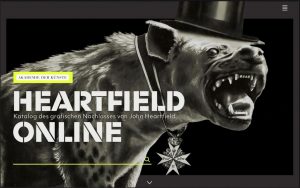
Kosmos John Heartfield
Christian Heidel und die Springerpresse
Die Medien sind schuld, wer sonst. „Ich stelle mich doch nicht gegen die Springerpresse&ldquo...
Public! Die Bibliothek als Demokratiewerkstatt
„Erfahrungen macht jeder Mensch. Er wird ihnen aber nur vertrauen, wenn es Orte und Gewohnhei...
Fortune – Infortune – Fort_une
Zum Fortuna-Gedanken im Umfeld der Margarete von Österreich von Aline Fries, B. A. Fortune Inf...
Annotieren, Analysieren, Visualisieren der Werkstattbericht
Das Cluster „Annotieren, Analysieren, Visualisieren“ der dritten Förderphase in DARIAH-DE, unter Leitung des Instituts für Sprach- und Literaturwissenschaften der Technischen Universität Darmstadt, trägt mit der Fokussierung auf Linked Open Data Technologie der Transparenz und Verstetigung der wissenschaftlichen Annotationsprozesse Rechnung. In insgesamt drei Anwendungsfällen, in Kooperation mit dem Karlsruher Institut für Technologie, der Akademie der Wissenschaften und der Literatur Mainz, des Salomon Ludwig Steinheim-Institut für deutsch-jüdische Geschichte und der Berlin-Brandenburgischen Akademie der Wissenschaften, geht es vor allem um die Weiterentwicklung von digitalen Methoden zur Generierung, Analyse und Visualisierung semantischer Annotationen mit dem Ziel, Interoperabilität und Nachnutzbarkeit zu gewährleisten.
Im gemeinsamen Beitrag (s. Ankündigung) im Rahmen der DARIAH-DE Grand Tour am 20.9.2018 in Darmstadt präsentierte das Cluster in Form eines Werkstattberichts mit anschließender Diskussion die entwickelten tragfähigen Lösungsansätze basierend auf bestehenden repräsentativen Forschungsbeständen und unter Verwendung etablierter Standards, wie beispielsweise Text Encoding Initiative, CIDOC Conceptual Reference Model und Web Annotation Data Model.
Die Vorträge sind als Videodokumentationen online abrufbar:
Quelle: https://dhd-blog.org/?p=11198
#InfoSociety Gesetzes- und datenschutzkonforme Geschichtsschreibung. Hochschule erwägt Vernichtung akademischer Abschlussarbeiten
https://www.heise.de/forum/p-34009089/ Eine Hochschule will Abschlussarbeiten nur noch so lange aufzubewahren, bis die Anfechtungsfrist für die Prüfungen abgelaufen ist. Stehen wir vor einer ‘gesetzes- und datenschutzgesteuerten’ Geschichtsschreibung? Wie sieht die dsgvo-konforme Gesellschaft der Zukunft aus? Beitrag von Dr. Andreas C. Hofmann auf heise.de.