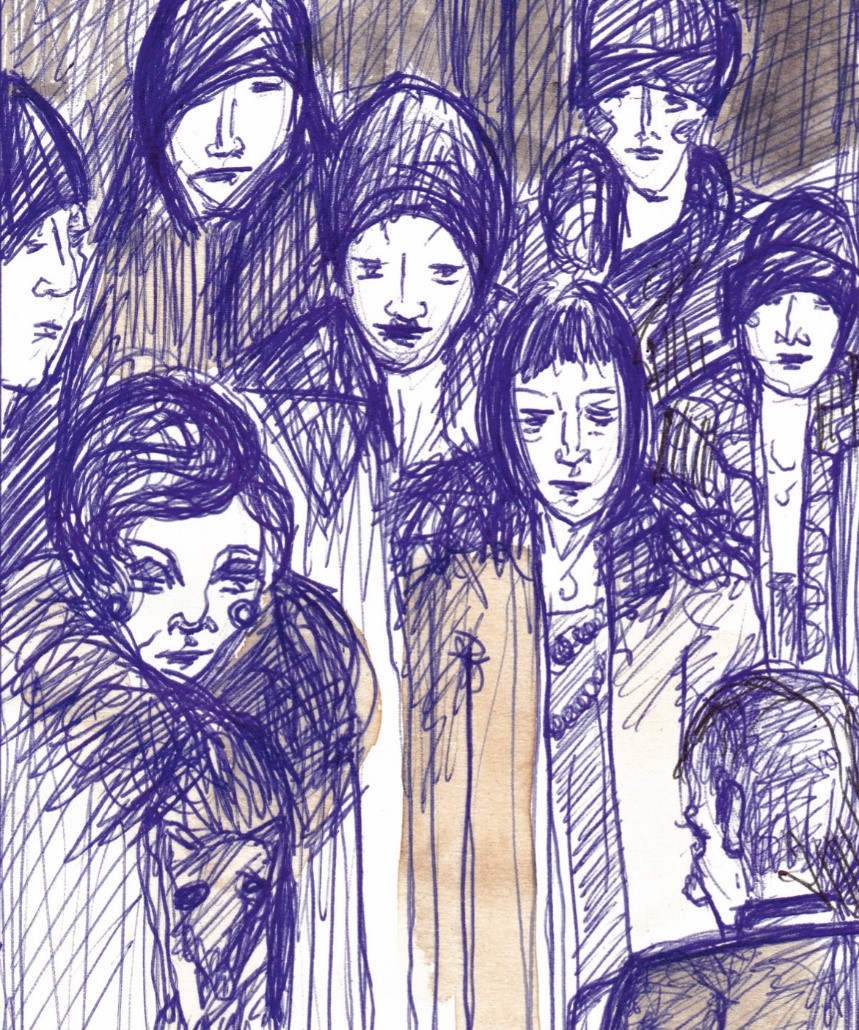
Talking @ dhiha9: Four Historians on Historicizing Digital Practices and Research Identities

by Sophie Spliethoff & Virgile Reignier

From 23rd to 25th October 2024, the German Historical Institute in Paris opened its doors to about 50 international scholars who discussed past, present and future developments of digital history at the conference “Revolutionary, Disruptive, or Just Repeating Itself? Tracing the History of Digital History”. The conference program can be found here: https://dhdhi.hypotheses.org/9978.

Starting with questions of defining the field, differentiating it from similar research areas and tracing its relations to historical research as well as digital humanities, research identities and communities were at the center of debate. Main topics also included ethical aspects and power structures implicated by digital practices, the institutionalisation of the field as well as teaching and communicating digital historical research. Ultimately, at the heart of the conference laid the questions of the ways in which digital history itself becomes historicised and how regional and global histories of the field may or may not be written.

[...]

Quelle: https://dhdhi.hypotheses.org/10825

Weiterlesen

Bericht zum Workshop „(Generative) KI für Kultur- und Textdaten“, 4. und 5. November 2024, Goethe- und Schiller-Archiv, Weimar

Autor: Gerrit Brüning

Der Einsatz Künstlicher Intelligenz in den digitalen Geisteswissenschaften hat durch die Fortschritte im Bereich großer Sprachmodelle (LLMs) und insbesondere die Veröffentlichung von GPT-3.5 im November 2022 eine neue Stufe erreicht. Seither hat sich das methodische Feld durch multimodale Modelle, Retrieval Augmented Generation (RAG) und Integration graphbasierter Ansätze nochmals weiterentwickelt und ausdifferenziert. Die perspektivischen Einsatzszenarien reichen damit weit über Sprachverarbeitung und Textgenerierung hinaus. Die damit verbundenen innovativen und experimentellen Ansätze sind Teil eines größeren Spektrums etablierterer Formen maschinellen Lernens zur Lösung spezifischer Aufgaben (z.B. Bildanalyse, Handschriftenerkennung, Topic Modeling, Named Entity Recognition und andere NLP-Tasks). Sie regen aber auch zu ethischen Diskussionen, zur erneuten Betrachtung von hergebrachten Problemen der Philosophie des Geistes an und halten in Lehr-Lern-Situationen Einzug.


[...]

Quelle: https://dhd-blog.org/?p=21880

Weiterlesen